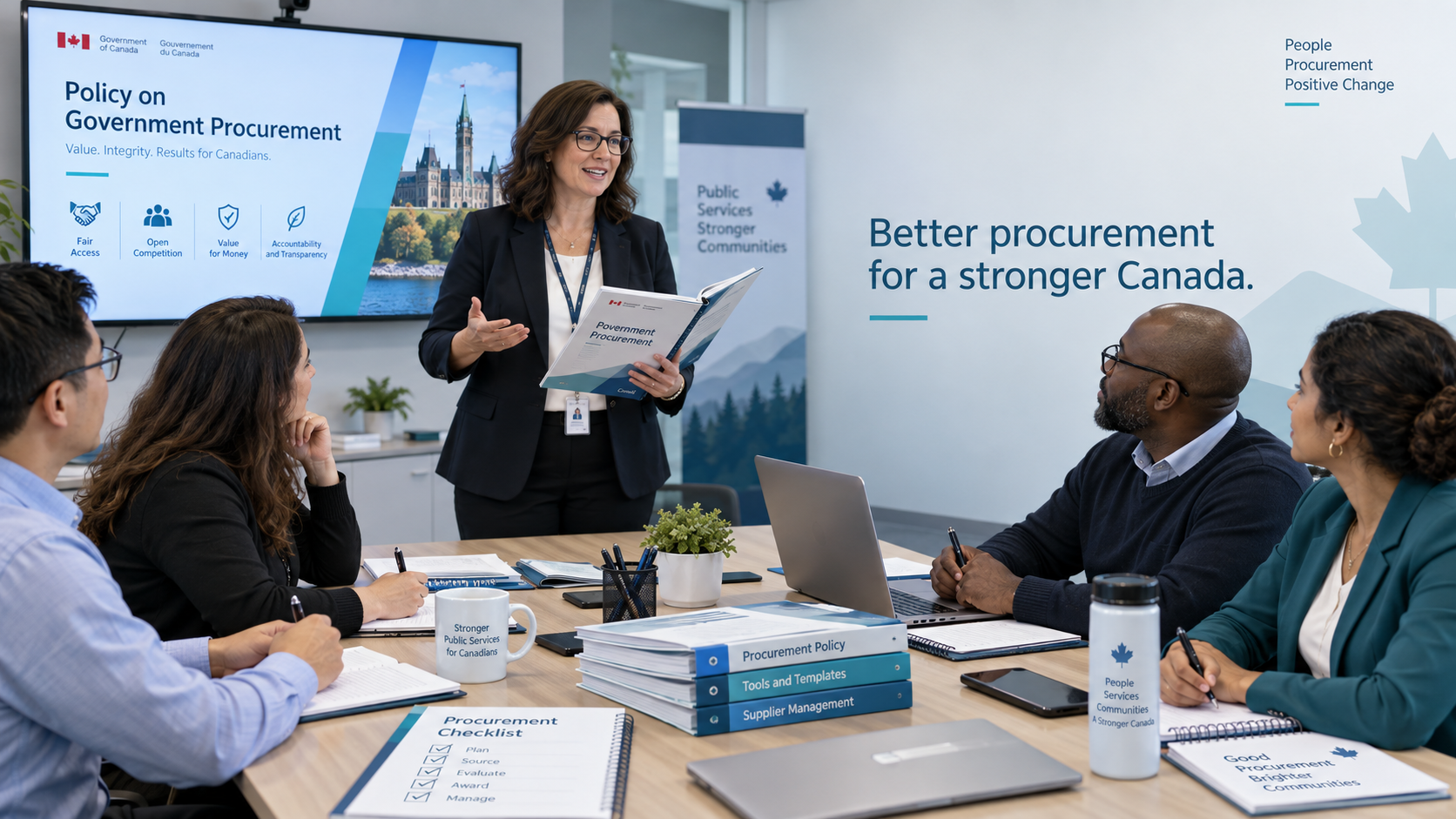
government procurement policy
Public purchasing decisions must be fair, documented and defensible. A government procurement policy gives people a shared method for planning purchases, inviting suppliers, evaluating offers and managing contracts while protecting public trust.
For newcomers, policy is more than an internal document. It connects authority, accountability, ethical conduct and value for money. Learning how these pieces fit together is a practical first step toward confident procurement work.
What is a government procurement policy?
A plain-language definition for newcomers
A government procurement policy is a set of approved instructions for buying goods, services or construction on behalf of a public organization. It explains who may make decisions, which steps a purchase should follow, how suppliers receive information and what records must be kept.
How policy fits with laws, regulations and internal rules
Policy does not replace legislation or regulations. A public body must identify the requirements that apply to its activities, then follow relevant directives, trade obligations, financial controls and internal procedures. The policy turns those requirements into working steps for employees, delegated authorities and procurement professionals.
The framework depends on the organization and jurisdiction. Federal departments may consult official Government of Canada procurement instruments, while a municipality may follow provincial requirements and its own council-approved purchasing bylaw. Treat this article as an orientation, not legal advice. For a live purchase, check the responsible public body’s current guidance and seek qualified advice where needed.
Why fairness, transparency and value matter
Public procurement uses public funds, so decisions need a clear rationale. Fairness means suppliers receive consistent information and a reasonable opportunity to participate. Transparency means requirements, evaluation methods, approvals and contract decisions can be understood and reviewed. Value considers the full outcome, including quality, service, risk, delivery and lifecycle cost, rather than price alone.
These ideas give a procurement team a sound basis for communicating with suppliers and internal stakeholders. They also help the organization show how a decision was reached.
For a structured learning path, Procurement Training. Individual offers Canadian-focused public sector procurement training with PDP certification, combining self-directed learning with instructor-led live sessions.
What does a government procurement policy include?

Authority, approvals and purchase categories
A policy usually identifies roles and delegated authority. It may distinguish the responsibilities of a program area, purchasing unit, financial officer, evaluation committee and contract manager. Purchases can be grouped by estimated value, complexity, risk, urgency, commodity type or funding source. Those categories may affect approval levels and sourcing requirements. Confirm the current rule in the organization’s official policy rather than assuming that one method applies everywhere.
Sourcing methods
Policy may describe methods such as a public tender, request for proposals, request for quotations, invitational process, standing arrangement or non-competitive procurement. The appropriate method depends on the requirement, market conditions, risk and applicable authority. A request for proposals may assess technical merit and price, while a quotation process may suit a clearly defined requirement. The policy should connect planning, solicitation, evaluation, award and approval.
Documentation and supplier communication
A procurement file may show the need, budget, research, procurement strategy, supplier communications, evaluation records, approvals, contract, amendments and performance information. Policies may also address conflicts of interest, confidentiality, accessibility, privacy, Indigenous procurement considerations, sustainability and records retention.
Suppliers need consistent instructions, deadlines, addenda and responses through the approved channel. Good records and clear communication make the decision easier to understand later.
Where to find the official policy
Start with the organization’s procurement, finance or policy library. Check its current forms, templates, delegations and purchasing procedures. Official federal procurement information is available through Public Services and Procurement Canada. Provincial, territorial and municipal bodies publish their own procurement portals and directives. Save the version and date consulted, especially when a purchase has a tight timeline.
How does procurement policy vary across Canada?
Federal procurement policy at a glance
Federal procurement involves Government of Canada departments, agencies and federal procurement services. Official federal guidance addresses areas such as contracting, supply arrangements, procurement integrity, accessibility and Indigenous business participation. A federal buyer must identify the responsible department, applicable instrument and approval path before proceeding. Federal guidance is not a universal rulebook for every Canadian public organization, so verify the source for the specific purchase.
Provincial, territorial and municipal differences
Provinces and territories establish their own public-sector frameworks. Municipalities operate under provincial or territorial legislation and their own bylaws, policies and delegations. A local government procurement process may involve council authority, purchasing procedures, public notice requirements and local contract administration practices. Health authorities, school boards, colleges and Crown organizations may have additional rules.
How to locate guidance for your jurisdiction
Identify the public body, governing jurisdiction and type of purchase before relying on guidance. Search the organization’s official website for procurement policy, purchasing bylaw, supplier information, tendering, contract awards and delegated authority. Check publication dates, revision notes and links to current forms.
When learning from a government procurement example, focus on the decision trail rather than copying the procedure. Ask which authority applied, how suppliers were treated, what evidence supported the award and how contract performance will be monitored. That habit builds judgement across federal, provincial, territorial and municipal settings. Team procurement training programs can help organizations build that foundation through Canadian-focused instruction.
How does policy guide the procurement process?
A written policy becomes useful when it guides practical decisions. The process usually starts with a documented business need, budget confirmation and a clear description of the required goods, services or construction. The organization then selects a sourcing method, prepares solicitation documents, communicates with suppliers, evaluates submissions against published criteria and obtains the required approval before awarding a contract.
Policy also supports contract administration after award. The contract manager may track deliverables, service levels, invoices, changes, risks and supplier performance. A purchase is not complete merely because an agreement has been signed. Closeout records, lessons learned and confirmation that goods or services were received help demonstrate stewardship of public funds. Practical contract management training for teams can support these post-award practices.
Using a process flow chart as a learning tool
A government procurement process flow chart can help a new employee see how planning, approvals, competition, evaluation, award and contract management connect. It is a learning aid, not a substitute for current policy, legislation, trade obligations or delegated authority. If a requirement is unusual, urgent, high-risk or non-competitive, ask the organization’s procurement or legal authority for direction before proceeding.
What does policy mean for government procurement contracts?

Government procurement contracts turn an approved purchasing decision into responsibilities for the public organization and supplier. An agreement may describe scope, specifications, pricing, term, deliverables, acceptance requirements, payment conditions, privacy duties, insurance, dispute processes and amendment rules. The wording should match the solicitation and evaluation outcome. Changes after award may need additional review because they can affect fairness, scope or value.
Canadian procurement may also be affected by trade commitments. Government procurement in international trade can involve market access, non-discrimination, tender notices and procedural obligations under applicable agreements. Requirements vary by public body, purchase and agreement. Consult the official guidance for the responsible jurisdiction instead of relying on a general summary.
Building confidence through structured learning
New practitioners benefit from learning the vocabulary, decision points and ethical responsibilities before managing a complex file. Procurement Training. Individual provides a progression path from beginner to procurement expert. Its Canadian-focused public sector procurement training with PDP certification combines self-directed learning with instructor-led live sessions.
Use training alongside the current rules for your organization. A sound government procurement policy provides structure, while professional judgement grows through careful planning, reliable records, respectful supplier communication and timely advice.
How can you review a procurement decision?
A sound procurement decision should be explainable before, during and after the purchase. Confirm the business need, available funding, decision authority and applicable purchasing rules. Record why the chosen strategy suits the requirement, how suppliers will be treated consistently and which risks require attention.
Before issuing a solicitation, review the specifications for clarity, accessibility and supplier neutrality. During evaluation, use only the criteria published in the solicitation. After award, connect invoices and performance reports to the contract terms. These checks create a reliable audit trail.
A short review checklist for practitioners
- Confirm the public body, jurisdiction and applicable authority.
- Define the requirement, outcomes, constraints and acceptance measures.
- Check whether accessibility, privacy, security, sustainability or Indigenous procurement considerations apply.
- Choose a sourcing method that fits the requirement, risk and approved procedures.
- Keep records of research, communications, evaluation, approvals and contract changes.
- Plan contract monitoring before the agreement is signed.
How can organizations prepare for future procurement needs?
Public organizations are managing changing service expectations, digital tools, supply risks and climate-related considerations. These developments make planning, data quality and contract oversight more significant. Teams may need clearer outcome-based specifications, stronger information management, supplier-performance measures and early risk assessment.
Innovation should be introduced with care. Before adopting a new technology or purchasing model, identify the problem it will solve, the information it will use and the controls needed to protect public interests. Consider accessibility, cybersecurity, privacy, interoperability, staff capability and long-term operating cost. A pilot can provide useful learning when its scope, evaluation criteria and approval route are defined in advance.
Turning individual knowledge into team capability
Consistent procurement depends on more than one knowledgeable employee. Organizations benefit from shared terminology, current templates, role clarity, coaching and periodic file reviews. A learning plan can help new staff understand solicitation design, evaluation, contract management, supplier relations and records stewardship in the right sequence.
Use official jurisdiction-specific guidance for every live purchase, then build professional knowledge through structured education and supervised practice. When teams understand both the reason behind a control and the action it requires, they can adapt responsibly without losing fairness or traceability.
For newcomers, a sensible next step is deliberate preparation: read the applicable rules, ask focused questions, document decisions and seek approval when authority is uncertain. That discipline supports ethical public service and helps procurement professionals procure with confidence.