
procurement training online Canada
Choosing procurement training online Canada starts with a practical question: do you need to understand public purchasing rules or build broader supply chain skills? The answer can help you select relevant coursework and connect learning to the responsibilities you expect to take on.
Key Takeaways
- Start by deciding whether your role focuses on public sector purchasing rules or general supply chain management to choose the right online training path.
- Look for programs that match your career goals and offer recognized certifications in Canadian public procurement.
- Many online courses include practical examples and can help you apply for government funding or employer support.
- A clear understanding of your responsibilities will make it easier to select coursework that directly applies to your daily work.
Public procurement training and general supply chain education can both support a career, but they have different areas of focus. Here’s how to distinguish them and identify a sensible starting point.
Navigating Your First Steps in Canadian Procurement Training Online
What is Public Procurement and Why Does it Matter in Canada?
Public procurement is the process public organizations use to acquire goods, services and construction. It includes identifying a need, planning a purchase, inviting and evaluating bids, awarding a contract and managing the supplier relationship. Municipalities, school boards, hospitals, academic institutions, provincial governments and federal departments may all have purchasing responsibilities.
The process carries a public accountability responsibility. A well-planned competition should support fair access for suppliers and a decision the organization can explain and document. Training can help newcomers understand how sourcing, evaluation criteria, conflict-of-interest practices, approvals and contract records fit together.
The Core Question: Where Do I Begin My Online Procurement Learning Journey?
Begin with the tasks you expect to perform. If you are new to public purchasing, start with terminology and the procurement lifecycle: needs assessment, market research, solicitation, evaluation, award and contract management. If you already work in a purchasing role, identify a specific gap, such as writing a clear statement of work or documenting an evaluation.
Review the course outline before registering. Check whether it addresses Canadian public sector practices, the prior knowledge expected, the learning format and any assessment or credential requirements. Procurement Training. Individual is a Canadian-focused public sector option to consider for structured learning connected to procurement responsibilities.
Understanding the Canadian Public Procurement Environment: Key Principles
Public procurement rules and procedures depend on the organization and the purchase. The Canadian Free Trade Agreement and the Canada-European Union Comprehensive Economic and Trade Agreement are relevant to public procurement; applicable requirements can depend on factors such as the buying entity, procurement type and value. A course should help learners recognize when trade agreement obligations may matter, rather than treating every purchase as identical.
Other useful foundations include transparency, fairness, accountability, competition and sound record-keeping. These principles become practical habits: use criteria related to the requirement, apply the same evaluation approach to all bids, document decisions and follow approval controls. For a specific procurement, consult your organization’s current policies and official guidance.
Choosing the Right Path: Public Sector vs. General Supply Chain Training
Public sector procurement education centres on purchasing within public accountability frameworks, including solicitation practices, defensible evaluation and contract oversight. General supply chain education may cover a wider set of functions, such as sourcing, logistics, inventory, operations and supplier relationships. There can be overlap, but the learning goals are not interchangeable.
Choose according to the work you want to do. If your responsibilities involve public tenders or public contracts, look for Canadian public procurement content. If you want a broader view of how goods and services move through an organization, a supply chain designation may fit better. The Procurement Training. Individual option offers a Comprehensive progression path from beginner to procurement expert, Canadian-focused public sector procurement training with PDP certification, and a Combination of self-directed learning with instructor-led live sessions.
Comparing Online Procurement Programs: Public Sector Credentials vs. Broader Supply Chain Designations

Focus on Public Sector Procurement: The PSPP® Pathway and its Value
A Public Sector Procurement Program (PSPP®) is a pathway to examine when your work or career goals centre on government and broader public-sector purchasing. When comparing programs, look for coverage of procurement planning, competitive solicitation, bid evaluation, supplier communications, contract administration and public accountability. Confirm the credential awarded and any completion or assessment conditions in the program information.
For Canadian context, check whether the curriculum addresses trade agreements and the policies that guide public organizations. Public procurement work can also involve maintaining a clear record of decisions and responding to contract performance issues after award.
Understanding the SCMP Designation: A Broader Supply Chain Perspective
The Supply Chain Management Professional (SCMP) designation represents a broader supply chain learning route to assess against your goals. Its relevance depends on the work you intend to do and the designation’s published requirements. Review current course and credential information to understand the subjects covered, prerequisites, assessment and time commitment.
A broad supply chain perspective may suit people whose responsibilities extend beyond public tendering into areas such as operations, logistics, inventory or end-to-end supplier management. If your immediate work is public purchasing, check how much learning is devoted specifically to Canadian public procurement procedures.
Key Differences: Canadian Public Procurement vs. General Supply Chain Skills
The distinction is mainly one of scope. Public procurement learning focuses on sourcing within a public organization’s governance and accountability requirements. General supply chain learning can span a wider range of organizational activities and supplier flows. Both may address sourcing and supplier relationships, but their application and emphasis can differ.
| Decision point | Public sector procurement pathway | Broader supply chain pathway |
|---|---|---|
| Typical focus | Public purchasing processes, governance and accountability | Supply chain functions across an organization |
| Questions to ask | Does it cover Canadian public procurement and contract oversight? | Does it cover the supply chain areas relevant to your role? |
| Useful fit to explore | Public tenders, evaluation records and public contracts | Responsibilities that extend across procurement, logistics or operations |
| Credential check | Verify the program’s credential name and requirements | Verify designation requirements and the curriculum’s breadth |
When to Choose a Public Sector Focus: Identifying Your Career Goals
Consider a public sector focus if you work for, or plan to support, a municipality, school board, hospital, academic institution or government organization. It can also be relevant if your duties involve public solicitations, evaluation, approvals, supplier questions or contract files. Compare the outline with the tasks you want to perform and confirm that the program teaches the Canadian context you need.
When a Broader Supply Chain Designation Might Be Right
A broader designation may be worth considering if you want learning that connects procurement with supply planning, logistics, inventory or operations. It may also suit a professional whose responsibilities span public and private sector supply chain functions. Identify the skills your role calls for, then compare them with the published curriculum. If you need both perspectives, choose a first step based on the most pressing knowledge gap.
Online Learning Formats and Canadian Compliance: What to Expect
When choosing procurement training online Canada, look beyond convenience. The format should help you practise relevant tasks, while the curriculum should address Canadian public-sector requirements where relevant. Check how learning is delivered, whether you can ask questions, how progress is assessed and which topics are included. These details help you judge whether a course can prepare you to apply concepts in procurement plans, solicitation documents and contract files.
Self-Paced eLearning vs. Live Virtual Cohorts: Finding Your Fit
Self-paced eLearning lets you work through lessons around your schedule. It can suit learners balancing study with work, especially when materials include practical exercises, review activities and progress markers. Before enrolling, check whether access is time-limited and whether assessments or instructor support are included.
Live virtual cohorts provide scheduled sessions with an instructor and other learners. You can ask questions and learn from discussion, but you will need to protect time on your calendar. Some programs combine both formats. For example, Procurement Training. Individual offers a Combination of self-directed learning with instructor-led live sessions. Review the course schedule and participation expectations to see whether it fits your availability.
The Importance of Canadian Trade Treaty Compliance (CFTA, CETA) in Training
Canadian public procurement coursework should help learners recognize when trade agreement requirements may apply. The Canadian Free Trade Agreement (CFTA), including Chapter 5, and the Canada-European Union Comprehensive Economic and Trade Agreement (CETA) are relevant to public procurement. Applicability can depend on the buying organization, procurement and applicable thresholds, so training should explain how to identify the rules that need attention rather than imply that every purchase follows the same process.
Look for instruction connecting treaty obligations with practice, such as planning a solicitation, setting out requirements, communicating with suppliers and keeping a defensible record. This context matters in municipal, academic, school board and hospital settings, where staff need to follow organizational procedures as well as applicable requirements. Confirm that course examples are Canadian and that learners are directed to current official guidance for specific situations.
How Online Courses Cover RFP Development and Competitive Bidding
A useful course should show how to turn an operational need into a clear solicitation. For a request for proposals (RFP), that can include describing the requirement, setting measurable evaluation criteria, explaining the submission process and documenting how bids will be assessed. Look for exercises that ask you to connect each criterion to the stated need.
Competitive bidding also involves consistent supplier communications and an evaluation record that supports the final decision. Ask whether the curriculum covers roles, approvals, conflict-of-interest controls and file documentation. Sample scenarios can help you identify gaps before applying the process at work.
Contract Management Skills: Beyond the Award Stage
Training should not end when a contract is awarded. Contract management includes monitoring deliverables, recording performance, managing approved changes and responding to concerns such as missed milestones or vendor non-performance. Clear roles and timely records help a team understand what was agreed and how issues were addressed.
Check whether lessons include post-award scenarios, including scope questions, amendments and disputes. These topics can prepare learners to follow internal approval steps and raise issues through appropriate channels, rather than make informal changes that may not be supported by the contract.
Is Certification Possible Entirely Online in Canada?
Some procurement learning can be completed online, but delivery and credential requirements vary by program. “Online” may mean self-paced lessons, scheduled virtual classes or a mix; assessments, attendance rules and completion conditions may differ. Read the provider’s current program details to confirm whether all required learning and assessment can be completed remotely and what credential is awarded.
Procurement Training. Individual is a Canadian-focused public sector option with PDP certification. Check its published program information for current delivery details and completion requirements before deciding whether it fits your needs.
Navigating Employer Funding for Your Procurement Training
Whether an employer pays for procurement training online Canada depends on organizational policies, available budget and approval processes. Before registering, find out who approves professional development, whether funds remain available and whether the course must relate directly to your duties. A clear request gives your manager a basis for deciding and helps you understand conditions such as attendance, completion or reimbursement requirements.
Does My Employer Have to Pay for Online Procurement Training?
Payment arrangements vary by employer. Some organizations fund training as part of staff development; others require employees to pay, share costs or request approval before enrolment. Ask about the process before committing to a fee. If you work in a public organization, check whether your role, department or collective agreement has relevant provisions, and confirm details with the appropriate human resources or finance contact. Keep written confirmation of the decision and any conditions.
Building a Business Case: How to Request Professional Development Funding
Connect the course to a work responsibility and explain how the learning could support your team. A request might identify a gap in solicitation planning, evaluation documentation or post-award contract administration. Include the course outline, delivery schedule, total cost and credential details. Explain how you will share useful learning with colleagues or apply it to a process, without promising savings or outcomes you cannot substantiate.
- Identify a task or knowledge gap relevant to your role.
- Match it to topics and learning activities in the course outline.
- Provide the fee, time commitment, format and any assessment details.
- Ask for a decision before enrolling, including any reporting or completion conditions.
Key Questions to Ask Your Employer About Training Budgets
Ask whether funding covers tuition only or required materials, whether approval is needed before registration, and when the budget year ends. Clarify whether paid work time is available for classes or study, how expenses are claimed, and what happens if you withdraw or do not complete the course. For scheduled sessions, confirm that your manager can accommodate the dates. These questions help prevent surprises and make the request easier to assess.
Employer Sponsorship: What to Look For in Training Providers
Give your employer information they can review: a detailed curriculum, learning format, assessment method, credential awarded, schedule and itemized fees. For Canadian public-sector roles, confirm that course materials address relevant Canadian practices. Procurement Training — Individual is one option to include in a funding request when its published content aligns with your goals. Share the program details so your employer can assess fit and approval requirements.
Understanding Your Organization’s Procurement Policy on Training
Training approval may involve rules beyond the professional development budget. Your organization may specify approved spending limits, purchasing steps, expense documentation or conflict-of-interest requirements. Ask the designated manager or policy contact how these apply before making a commitment. Keep the approval, course description, receipt and completion record together according to organizational procedures. This supports accountable spending and provides a clear record of the decision.
Making an Informed Decision: Your Next Steps in Procurement Professional Development
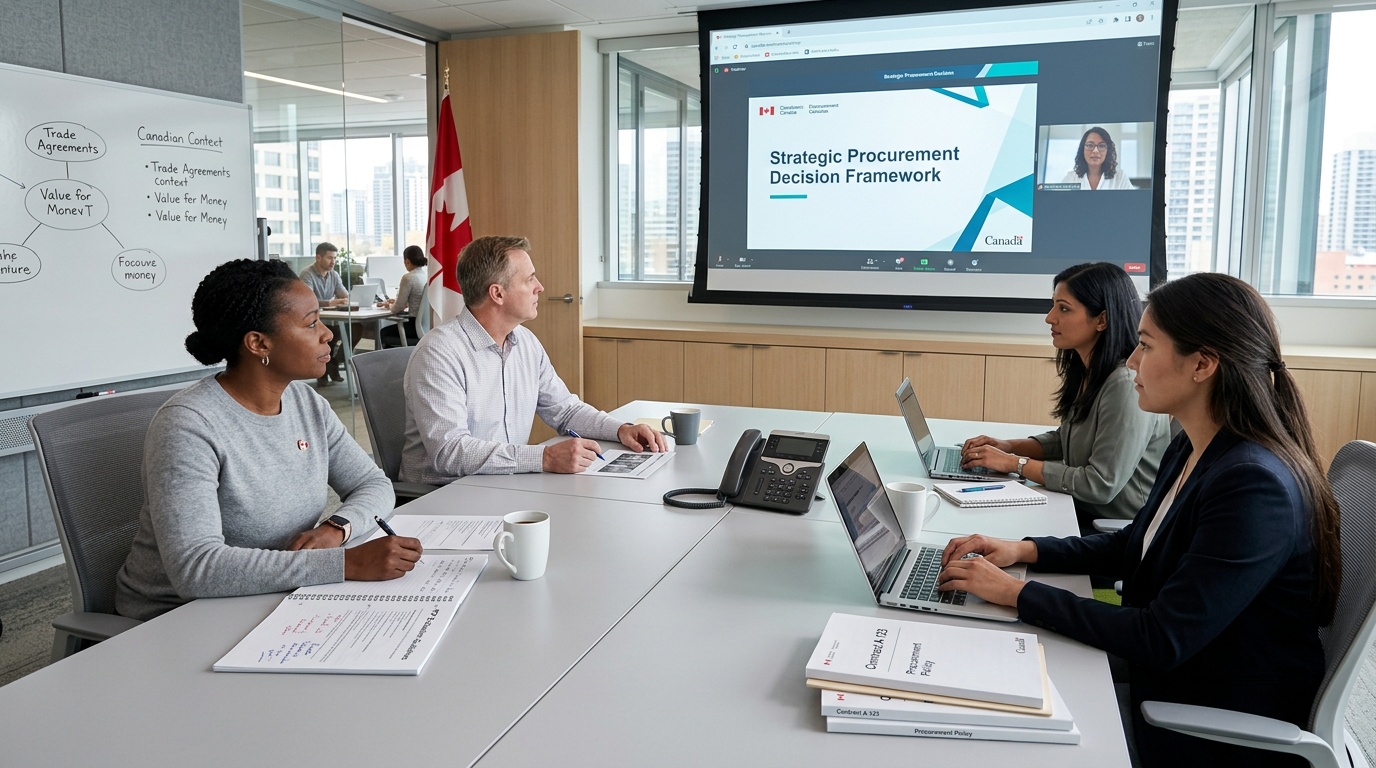
A Practical Decision Framework for Choosing Your Online Training
Use four checks before you enrol: identify the work skill you need, confirm that the curriculum teaches it in a Canadian public-sector context, verify the format and credential requirements, and obtain employer approval if needed. If your goal is public procurement practice, Procurement Training — Individual may be worth reviewing against those criteria. Your choice should fit your responsibilities, study time and funding plan.
Common Questions About Canadian Procurement Training (FAQ)
Can my employer be required to pay? Do not assume so; check your organization’s policies and applicable employment arrangements. Can all learning be online? Requirements vary, so confirm delivery and assessment details with the provider.
When to Seek Expert Guidance or Team Training
Ask for guidance when course content does not address a work situation or your team needs consistent procedures across roles. For a specific procurement, consult current organizational policies and qualified support.
Your Journey to Procurement Confidence Starts Now
Write down one learning goal, review a course outline and ask about funding before registering. The right procurement training online Canada can help you build knowledge at a manageable pace and approach your next responsibility with greater confidence.
Frequently Asked Questions
What options exist for accredited procurement training online in Canada?
Procurement training online in Canada includes public-sector programs such as the Public Sector Procurement Program (PSPP®) and broader supply chain pathways such as SCMP or CIPS. Compare each program’s curriculum, credential, assessment requirements and Canadian public-sector content before enrolling. Confirm current accreditation and credential details directly with the provider.
Does my employer have to pay for online procurement training?
Employers in Canada are not automatically required to pay for online procurement training. Some organizations may fund learning when it relates to an employee’s role, so check your workplace’s professional development policy and ask your manager or human resources team about approval, reimbursement and any completion conditions.
What is the difference between SCMP or CIPS and a PSPP® program?
SCMP and CIPS focus on broader supply chain or procurement learning, while PSPP® centres on public-sector purchasing. A PSPP® pathway may suit work involving public tenders, bid evaluation and contract oversight; broader designations may fit responsibilities across areas such as logistics, inventory and operations. Check each program’s current curriculum and credential requirements.
How do Canadian trade agreements affect public procurement training?
Canadian trade agreements, including the Canadian Free Trade Agreement and CETA, can set procurement obligations for covered organizations and purchases. Good public procurement training helps learners recognize when agreement requirements may apply and understand fair competition, evaluation and record-keeping. Specific obligations depend on the entity, purchase type and value.
Can I complete Canadian public procurement certification entirely through self-paced online study?
Some Canadian public procurement training offers self-directed online study, while other programs include instructor-led sessions or assessments. Check the provider’s current course format, completion conditions and credential requirements before registering. For example, NECI’s Procurement Training for Individuals describes a mix of self-directed learning and live instructor-led sessions.
What should I check before choosing online procurement training in Canada?
Before choosing procurement training online in Canada, check that the course matches your work tasks and covers relevant Canadian public-sector practices. Review the course outline, expected prior knowledge, learning format, assessments and credential offered. For a specific purchase, follow your organization’s current policies and official guidance.