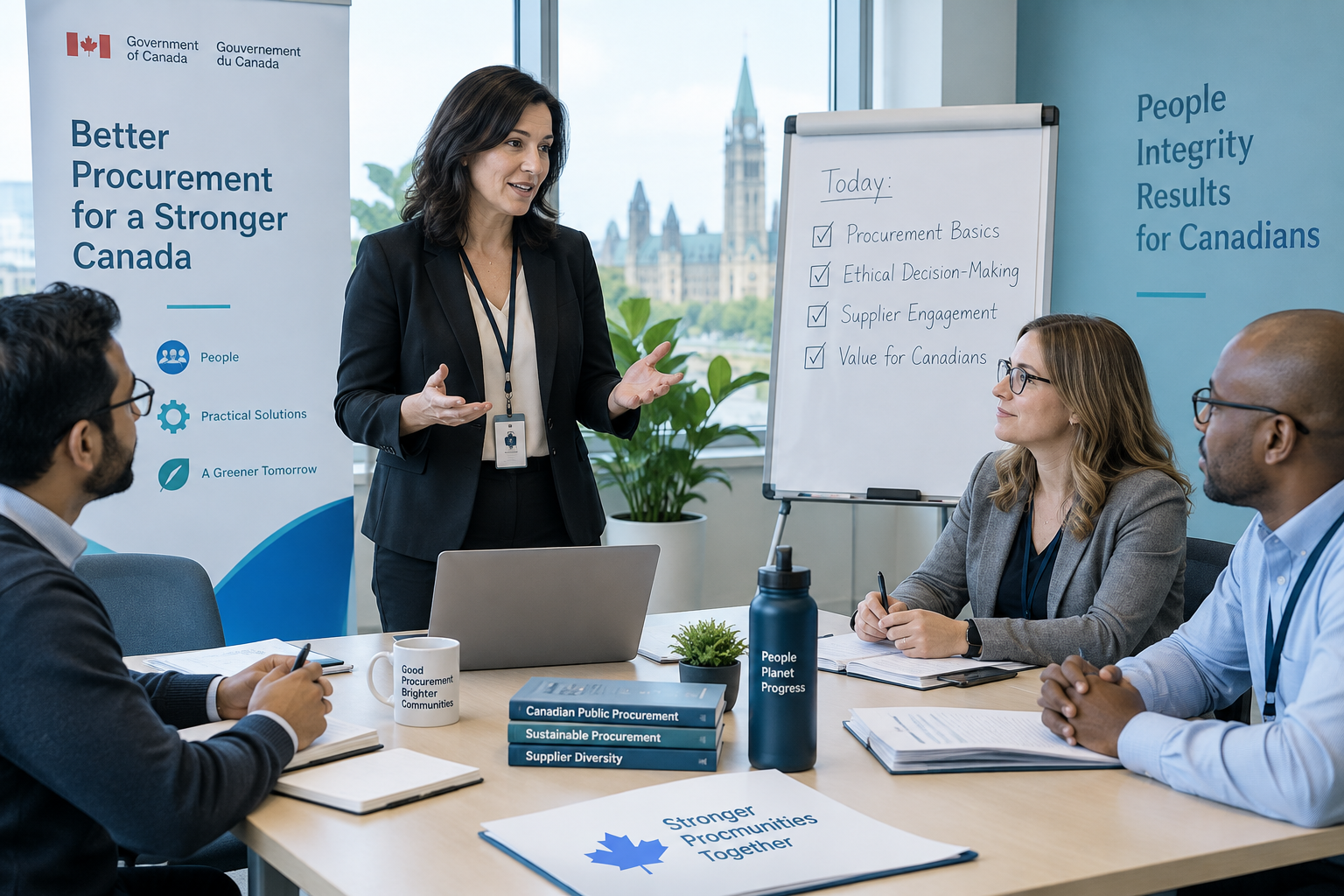
procurement coaching program
Public procurement requires more than knowing how to buy. A procurement coaching program connects policy, professional judgment, documentation, and daily decisions so your work is easier to explain and defend.
Key Takeaways
- A procurement coaching program helps you connect the written rules to the judgment calls you make every working day.
- Strong documentation habits, built through coaching, make your decisions far easier to explain when questions come up later.
- Knowing how to buy is only the starting point; understanding why each step matters is what builds lasting confidence.
- Working with a coach gives you a supportive place to test your reasoning before your decisions face an audit or review.
- The right program meets you where you are, whether you are new to public procurement or a seasoned practitioner sharpening your skills.
Whether you are entering public procurement from the private sector, taking on contract-management duties, or building capability across a public organization, the right support provides a clear development path. The aim is practical confidence: knowing which questions to ask, which records to maintain, and when to seek guidance.
What is a procurement coaching program?
A procurement coaching program is a guided learning experience that helps a person or team apply procurement knowledge to real work. It may include structured lessons, reflective questions, practical exercises, feedback, and discussion of procurement planning, solicitation design, supplier communication, evaluation, contract award, and contract administration.
Coaching versus training, mentoring, consulting, and certification
These services support professional development in different ways. Training presents a defined body of knowledge. Mentoring draws on another practitioner’s experience. Consulting provides advice or deliverables for a specific organizational problem. Certification confirms completion of a formal learning or assessment requirement. Coaching connects education with application: it helps learners examine decisions, practise a process, and build capability without taking responsibility for the organization’s procurement decision.
| Support type | Primary focus | Useful question |
|---|---|---|
| Training | Knowledge, concepts, and methods | What should I understand? |
| Mentoring | Professional perspective and encouragement | What can I learn from experience? |
| Consulting | Advice about an organizational need | What options could address this issue? |
| Certification | Formal recognition of achievement | What requirement have I completed? |
| Coaching | Application, reflection, and improvement | How can I make a sound decision in this situation? |
Why Canadian public-sector accountability changes the picture
Public-sector purchasing involves public funds, organizational authority, supplier relationships, and public trust. A sound process must be fair, transparent, accountable, and supported by an appropriate record. Generic buying advice is not enough. Learners must consider requirements, delegated authority, competition, evaluation criteria, conflicts of interest, accessibility, trade obligations, privacy, Indigenous participation where applicable, and internal policy.
A Canadian public procurement coaching program should translate those expectations into actions such as documenting the business need, separating mandatory requirements from rated criteria, recording evaluation rationale, communicating consistently with suppliers, and managing amendments within approved authority. Coaching does not replace policy, legal advice, formal review, or organizational approval; it bridges structured education and responsible application.
Who a procurement coaching program is for

New practitioners and private-sector professionals entering public procurement
New practitioners may understand purchasing, operations, finance, or supplier relationships while feeling uncertain about public-sector expectations. A private-sector professional may be comfortable negotiating price and delivery but need more practice with procedural fairness, open competition, evaluation records, approvals, and audit readiness. Coaching creates a safe setting for questions that may not arise during a busy solicitation.
Look for plain language, an explanation of the procurement lifecycle, and realistic documents and decisions. Useful outcomes include clearer role understanding, a consistent file structure, better risk awareness, and greater confidence when working with program staff, evaluators, suppliers, and approving authorities.
Experienced practitioners, procurement leaders, and contract managers
Experienced professionals may need support with a new leadership role, complex category, policy change, team supervision, or difficult stakeholder relationship. Contract managers need attention to performance monitoring, invoice review, issue escalation, change control, renewal decisions, records management, and closeout. Coaching helps them test their reasoning and identify process gaps before those gaps become disputes or audit concerns.
Municipalities, agencies, institutions, and public-sector teams
Organizations often assign procurement responsibilities without a shared development plan. Team support can establish common terminology, clarify accountabilities, and align procurement staff with finance, legal, operations, information technology, and program areas. Ask whether a provider can reflect your policies, approval levels, risk profile, procurement categories, and working environment.
Individual coaching or team coaching: choosing the right fit
Individual coaching suits a defined capability gap, entry into public procurement, or responsibilities beyond a professional’s current experience. Team coaching suits several people who need a shared approach to planning, solicitation, evaluation, contract administration, or supplier performance. Consider confidentiality, group size, delivery format, accessibility, time zones, practical exercises, and progress measurement.
Individual or team support?
Pros
- Individual sessions focus closely on a learner’s role and questions.
- Team learning creates consistent language, templates, and decision habits.
- Both formats connect learning to the procurement lifecycle.
Cons
- Individual coaching may not resolve a process problem affecting the whole organization.
- Team sessions may provide less private time for sensitive professional concerns.
- Neither format replaces required approvals or formal organizational controls.
For teams seeking a structured shared foundation, Procurement Training for Teams offers a Canadian-focused public sector procurement curriculum, a progressive certification pathway from essentials to procurement expert level. Procurement Training for Teams may suit coordinated learning across several roles, with coaching added when participants need help applying concepts to their own work.
How a procurement coaching engagement works, step by step
Step 1: Assess capability gaps and set measurable learning goals
A procurement coaching program should begin with discussion of the learner’s role, responsibilities, experience, and current challenges. The coach may review a capability self-assessment, sample documents, workflow concerns, or a specific procurement activity. The aim is to identify practical gaps in requirements development, solicitation planning, evaluation, approvals, supplier communication, contract administration, or records management.
Good goals describe observable progress. A learner might aim to create a clearer procurement plan, document evaluation rationale consistently, identify approval requirements earlier, or use a repeatable approach to supplier-performance issues. Delivery may include virtual meetings, in-person sessions, guided exercises, written feedback, or a combination. A focused engagement may involve occasional sessions over several weeks; broader development may continue across a procurement cycle.
Step 2: Apply coaching to real work across the procurement lifecycle
The learner brings a current, suitably anonymized work situation to the discussion. Together, they can examine the business need, procurement strategy, market approach, statement of requirements, evaluation method, communication record, approval path, and risk controls. The coach asks questions that test assumptions and consider fairness, transparency, authority, accessibility, privacy, trade obligations, and conflicts of interest.
The coach supports judgment without making the organization’s decision. A session may end with an action plan, documentation checklist, revised evaluation question, or issues for internal review. This builds confidence through practice and encourages habits that can be reused instead of treating learning hours as the main outcome.
Step 3: Review progress, measure outcomes, and plan what comes next
Progress can be reviewed through completed work products, reflective notes, supervisor observations, self-assessment, or discussion of a later procurement activity. Indicators include clearer records, more consistent process steps, better escalation decisions, stronger stakeholder communication, and improved ability to explain the rationale for an action. These are learning indicators, not not assured financial returns or compliance outcomes.
At the final review, the learner and coach can identify remaining gaps, suitable formal education, internal mentoring, policy resources, or a future coaching focus. The organization should consider whether a recurring issue belongs to the individual or points to a missing template, unclear delegation, workload constraint, or process weakness.
Coach qualifications and questions to ask before you commit
Look for a coach who understands Canadian public procurement, contract management, ethical practice, documentation, and adult learning. Relevant experience may include municipal, agency, institutional, or other public-sector purchasing, along with the ability to explain complex requirements in plain language. Ask how confidentiality is handled, whether examples are anonymized, how goals are recorded, and how the engagement fits with organizational policies.
- What procurement roles and public-sector environments have you supported?
- How will you distinguish coaching from consulting or legal advice?
- Can sessions address current work without exposing confidential information?
- What preparation is expected between sessions?
- How will progress and next steps be documented?
Practical procurement situations a coaching program can address
Five practical scenarios coaching can help you work through
Coaching is useful when a learner understands general policy but feels uncertain about the next defensible action. The situations below are hypothetical. They show the type of reasoning a guided discussion may support, not prescribed solutions.
| Situation | Useful coaching focus |
|---|---|
| Requirements are unclear | Separate the business need from preferred specifications and identify stakeholder questions. |
| Evaluators disagree | Review the criteria, evidence, scoring rationale, records, and escalation route. |
| A conflict-of-interest concern arises | Identify disclosure, recusal, documentation, and independent review requirements. |
| Supplier performance is declining | Examine service levels, notice provisions, performance records, communications, and corrective action. |
| An amendment or renewal is proposed | Test authority, contract terms, business need, value, timing, risk, and approval requirements. |
Coaching support after contract award: contract management and closeout
Procurement work continues after contract award. Contract managers may establish performance measures, verify deliverables, review invoices, manage issues, record changes, monitor renewal dates, and communicate with internal clients and suppliers. For focused development in this area, contract management training for individuals can complement coaching by providing structured learning.
Closeout should cover final acceptance, outstanding obligations, records retention, warranty matters, lessons learned, supplier performance, and confirmation that payments and deliverables are complete. These habits support continuity and make future procurement planning more informed.
Team learning and development: from individual coaching to team training
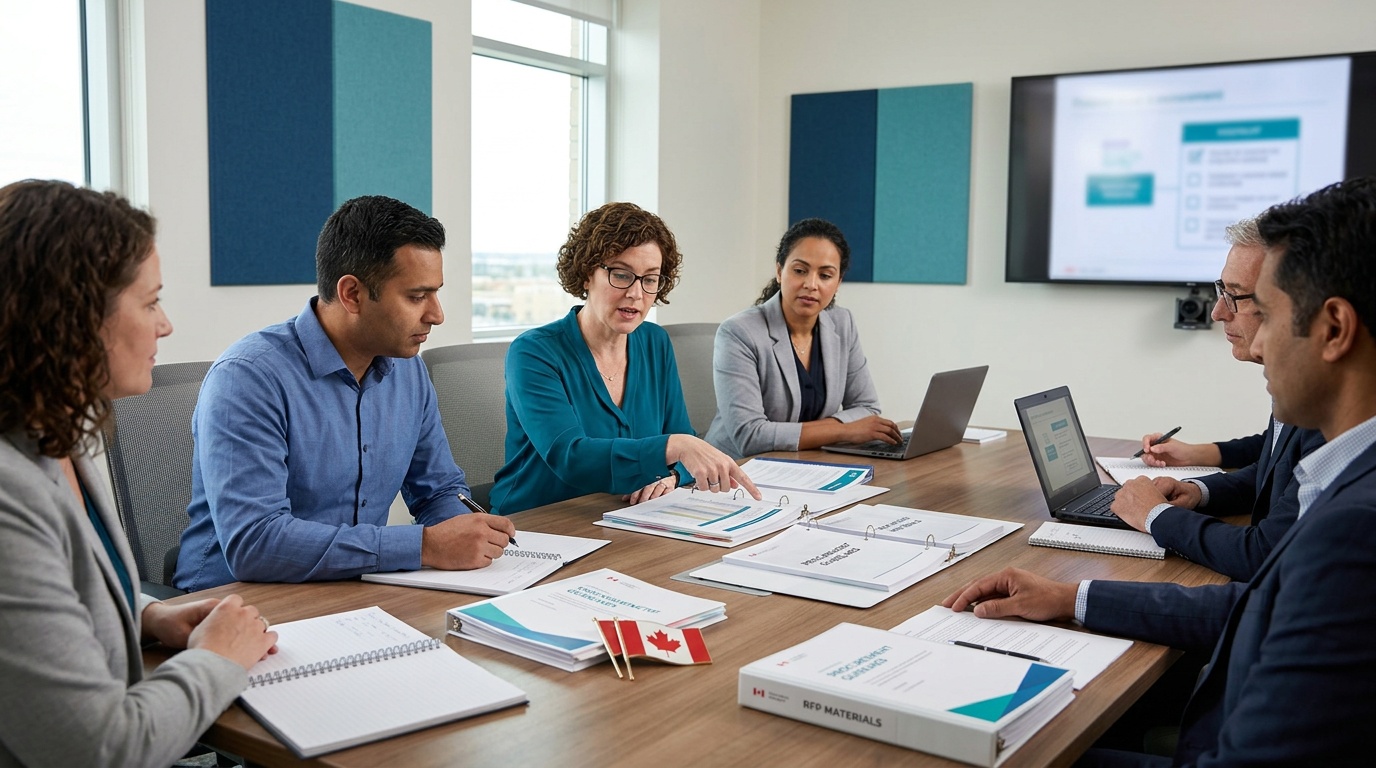
A self-assessment checklist: individual skill gap, team capability gap, or process problem?
Before selecting a learning format, identify the source of the difficulty. A procurement coaching program may suit one practitioner needing guided practice, while team training may suit several people applying different approaches to the same process. Sometimes the need is not primarily educational. An unclear delegation, incomplete template, inconsistent approval path, limited staffing, or outdated procedure can create risk even when employees understand procurement principles.
- Individual skill gap: One person needs support with requirements, evaluation, supplier communication, contract administration, or decision records.
- Team capability gap: Several roles need shared understanding of planning, competition, evaluation, approvals, or performance monitoring.
- Process problem: Staff understand their responsibilities, but policies, workflows, technology, templates, or authority limits make consistent work difficult.
- Mixed need: The organization requires process improvement alongside coaching or structured learning.
This diagnosis sets a sensible scope. Coaching builds judgment and confidence, team instruction establishes a shared foundation, and process review addresses organizational conditions shaping daily decisions. Training should not be expected to solve a governance or resourcing issue by itself.
Building a shared procurement operating language across your team
Teams work more consistently when they use the same terms for business needs, specifications, procurement strategy, solicitation, mandatory requirements, rated criteria, evaluation records, approvals, contract changes, supplier performance, and closeout. Shared language reduces uncertainty between procurement staff, program areas, finance, legal, information technology, and senior decision-makers. It also makes escalation and independent review discussions more precise.
Custom team learning can use anonymized exercises based on municipal, agency, or institutional work. Participants might map a procurement lifecycle, identify decision owners, practise documenting rationale, or review how a contract-management issue should move through the organization. The goal is a consistent method for asking questions, recording evidence, applying policy, and seeking approval, not identical judgment in every situation.
Combining coaching with courses, webinars, and custom team training
A broader development plan can combine structured courses, webinars, individual coaching, and custom team training. Courses provide foundational knowledge and planned progression. Webinars address focused subjects. Coaching supports application to a learner’s responsibilities. Custom training connects concepts to internal policies, approval workflows, contract templates, supplier relationships, and reporting practices. Consulting may suit advice about a defined process or operating challenge.
For coordinated team development, Procurement Training for Teams provides a Canadian-focused public sector procurement curriculum, a progressive certification pathway from essentials to procurement expert level. Procurement Training for Teams can provide the shared foundation, while coaching helps participants apply learning and identify questions for internal review.
The best next step depends on the diagnosis: individual guidance for a personal capability gap, team training for shared practice, and process improvement when the system creates confusion. This approach supports accountability while giving people a practical path to procure with confidence.
Frequently Asked Questions
What are the 5 P's in procurement?
The 5 P’s in procurement commonly refer to product, price, place, promotion, and people, though the meaning can vary by framework. In public procurement, a coaching program helps learners apply these ideas alongside policy, delegated authority, competition, documentation, and fairness. Always confirm the terminology used by your organization or training provider.
What is the best training for procurement?
The best procurement training combines public-sector rules with practical work, feedback, and opportunities to apply sound judgment. A procurement coaching program can help learners practise planning, solicitation design, evaluation, contract administration, and record keeping. Choose training that reflects Canadian requirements, your role, and your organization’s policies.
What are the 7 stages of procurement?
The 7 stages of procurement are typically planning, requirements definition, market research, solicitation, evaluation, contract award, and contract administration or closeout. A procurement coaching program connects each stage to approvals, fair supplier communication, evaluation records, risk management, and contract monitoring. Organizations may group or name the stages differently.
What are the 5 R's of procurement?
The 5 R’s of procurement are the right quality, quantity, time, place, and price. Public procurement applies these considerations within approved authority, fair competition, transparent evaluation, and proper documentation. Procurement coaching helps professionals balance operational needs with accountability, policy requirements, supplier communication, and responsible use of public funds.
What are the 7 principles of procurement?
The 7 principles of public procurement are commonly identified as fairness, openness, transparency, competition, accountability, integrity, and value for money. Canadian organizations may use different wording or add requirements based on policy and trade obligations. Procurement coaching helps learners turn these principles into consistent decisions and defensible records.
How can a procurement coaching program help someone new to public procurement?
A procurement coaching program helps new practitioners connect procurement knowledge to real public-sector decisions. Coaching can build confidence with planning, delegated authority, solicitation documents, evaluation rationale, supplier communication, and contract records. The support does not replace policy, legal advice, or organizational approval, but it creates a practical path to stronger judgment.