
procurement category planning
Public procurement decisions become easier to defend when related purchases are viewed together. Procurement category planning gives a team a practical way to understand its spending, the outcomes stakeholders need, the supplier market, and the risks attached to a category before individual procurements begin.
Key Takeaways
- Grouping similar purchases through category planning gives you a clear view of your total spending and recurring needs.
- You can pinpoint what stakeholders truly need before any single procurement begins, which reduces confusion later.
- Category planning helps you map the supplier market for that category and identify where risks might hide.
- This method makes each individual buy easier to justify because you see how it fits into the bigger picture.
- Starting with a category plan saves your team time and keeps your procurement decisions consistent and defensible.
This guide introduces the method for Canadian public-sector teams. It focuses on sound preparation, clear accountability, ethical supplier engagement, and decisions that can withstand review. The aim is not to remove professional judgement. It is to give that judgement a consistent structure.
What is procurement category planning?
Procurement category planning is the organized assessment of related goods, services, or works so an organization can plan future purchasing with greater consistency. A category may include information technology, professional services, facilities maintenance, fleet, construction materials, or another group of needs that share suppliers, markets, specifications, risks, or contract arrangements.
The work usually begins with a clear category definition and a review of available information. A team considers historical spend, current contracts, expiry dates, demand forecasts, business requirements, supplier capacity, market conditions, sustainability objectives, and potential conflicts of interest. It then identifies priorities and creates a forward-looking plan for sourcing, contract management, stakeholder involvement, and performance monitoring.
This approach is broader than preparing one competitive solicitation. It connects operational demand with procurement strategy. It can also reveal fragmented purchasing, overlapping contracts, inconsistent specifications, or gaps in contract coverage. Classification tools such as the United Nations Standard Products and Services Code, commonly called UNSPSC, may support analysis, although an organization may need an internal taxonomy that reflects its own services, accountabilities, and reporting needs.
Key insight: A category plan should explain not only what an organization buys, but why it buys it, how demand is changing, which risks require attention, and how a fair and transparent procurement route will support the required public outcome.
Benefits of procurement category planning
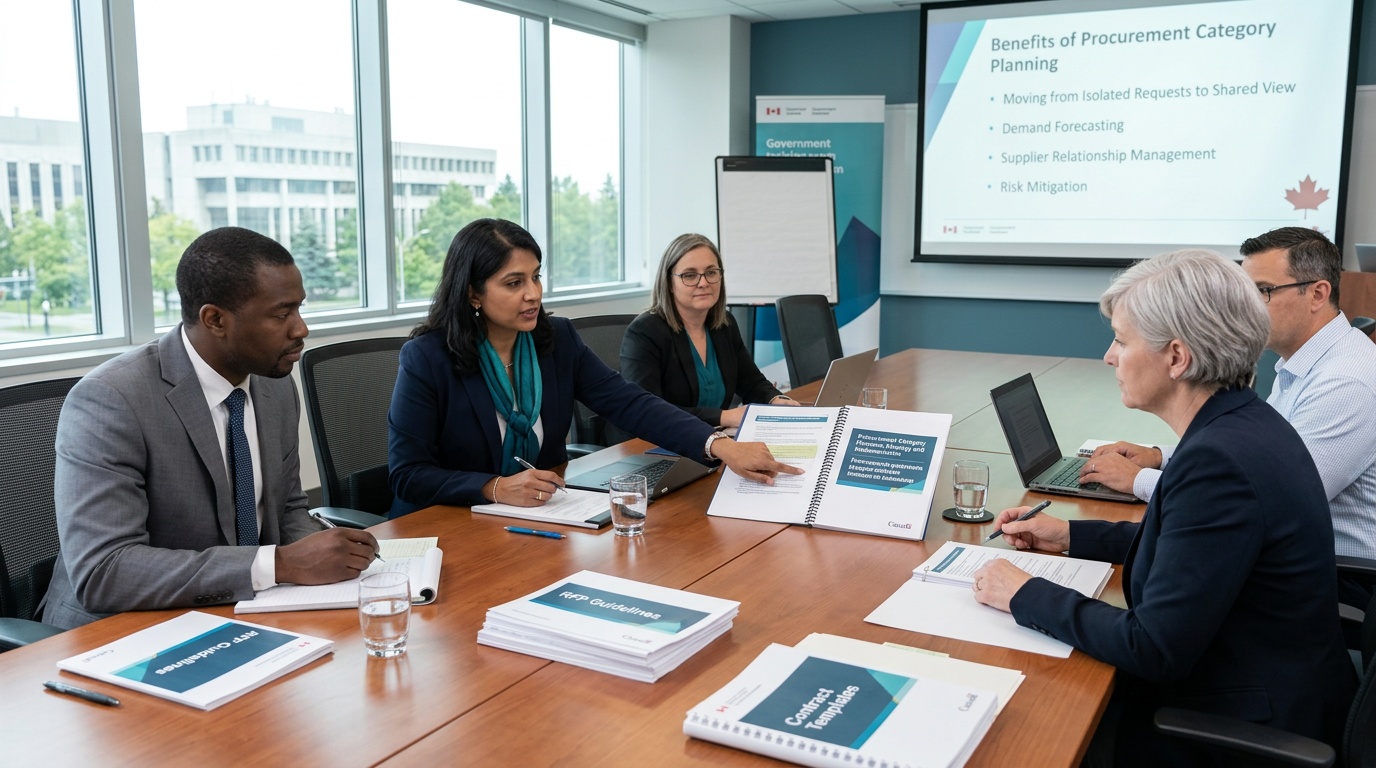
The value of this method is practical. It helps procurement professionals move from isolated requests toward a shared view of demand and priorities. Stakeholders can see how routine requirements fit within a procurement plan, while procurement staff gain evidence for sequencing work, setting consultation points, and identifying decisions that need delegated approval. This can reduce avoidable duplication and make urgent requests easier to assess against existing commitments.
Better visibility also supports responsible stewardship. A category review can bring contracts, purchase orders, supplier information, specifications, renewal dates, and performance records into one discussion. The team may identify opportunities to standardize requirements where appropriate, while preserving flexibility where service users or communities have distinct needs. It can also distinguish a genuine emergency from a late request that requires better forecasting. Those distinctions support fairness, competition, documentation, and public confidence.
Category management examples often show value through stronger planning rather than a single savings figure. A department that discovers several similar service agreements might coordinate expiry dates, clarify service levels, and create a more complete contract coverage plan. A municipality reviewing facilities-related purchases might separate recurring maintenance from one-time capital work, then assign suitable sourcing and contract-management approaches to each group. These are illustrative examples, not promised results.
The category management process also creates a useful bridge between strategic sourcing and contract administration. Strategic sourcing normally focuses on obtaining a particular requirement through market analysis and supplier selection. Category planning considers the wider pattern of requirements over time, then helps determine when sourcing activity is appropriate. After award, the same information can support supplier performance reviews, issue management, renewal decisions, price monitoring, and service improvements.
For readers asking, “what is category management in supply chain?”, the answer is a coordinated way to manage related demand, suppliers, contracts, risk, and performance across the purchasing cycle. In a public organization, that coordination must remain consistent with the applicable legislation, trade obligations, policies, thresholds, delegated authorities, accessibility expectations, and ethical standards of the jurisdiction. Training helps teams recognize those boundaries before they act.
For teams building a common foundation, Procurement Training for Teams provides a Canadian-focused public sector procurement curriculum. It. Procurement Training for Teams can help colleagues develop shared language for category analysis, planning, solicitation design, evaluation, contract management, and records.
The strongest benefit is improved confidence in decision-making. A well-maintained plan gives stakeholders a visible route from need to outcome, while giving procurement professionals a disciplined basis for challenge, advice, and prioritization. Teams can adapt the plan as demand, policy, supplier conditions, or organizational priorities change without abandoning accountability.
How to Choose procurement category planning
Choosing an approach to procurement category planning starts with the decision your team needs to improve. A small organization may need a clear spreadsheet, contract calendar, and agreed category owners. A larger public body may require spend analytics, a classification structure, stakeholder workshops, market research, risk registers, and reporting controls. The right approach is the one your team can maintain, explain, and connect to its procurement planning cycle.
Begin by defining the category boundary. Group requirements that share meaningful characteristics, such as suppliers, specifications, users, market conditions, delivery risks, or contract terms. Classification systems such as UNSPSC can support consistent reporting, but the coding structure should reflect your organization’s services and accountabilities. Review general ledger data, purchase orders, standing offers, active agreements, expiry dates, renewal clauses, and forecast demand. Then test the results with operational staff, finance, legal advisers where appropriate, and contract managers. Data that looks complete may still contain duplicate supplier names, inconsistent descriptions, or purchases assigned to the wrong cost centre.
A practical selection checklist
A sound plan should show how decisions will be made, not only describe past spending. Look for a method that documents the category objective, stakeholder requirements, supplier market, competition considerations, accessibility needs, sustainability priorities, Indigenous procurement considerations where applicable, and risks to service delivery. It should identify the proposed procurement route, anticipated timing, approval points, evaluation approach, contract-management measures, and records that must be retained. Public procurement rules differ by jurisdiction, so confirm the applicable legislation, trade agreements, policies, thresholds, delegated authorities, and emergency provisions before adopting procurement planning templates.
- Evidence: Can the team trace recommendations to reliable spend, contract, demand, and performance information?
- Governance: Are roles, approvals, conflicts-of-interest declarations, and escalation routes clear?
- Market understanding: Does the analysis consider supplier capacity, barriers to participation, competition, and responsible engagement?
- Implementation: Does the plan assign owners, milestones, measures, and review dates?
- Adaptability: Can the document be updated when requirements, budgets, policy, or market conditions change?
Teams should also distinguish category planning from strategic sourcing. Strategic sourcing is generally focused on selecting a procurement route and supplier arrangement for a defined requirement. Category planning takes a wider view across related needs and multiple time periods. It may recommend several sourcing events, contract changes, demand-management measures, or improved supplier-performance controls. This distinction helps prevent a routine request from becoming an isolated emergency and gives stakeholders a clear reason for sequencing work.
For organizations building shared capability, procurement consulting services can provide additional support when teams need help structuring category analysis, governance, or implementation. For organizations building shared capability, Procurement Training for Teams is a practical option to consider. Its Canadian-focused public sector procurement curriculum can help teams build common language and disciplined habits. The program. Procurement Training for Teams is especially suitable when procurement, finance, program, and contract-management staff need a consistent foundation rather than separate interpretations of the process.
Selection principle: Choose a planning method that makes the next defensible decision easier. A useful plan connects evidence, public need, market knowledge, approvals, timing, and contract oversight without creating documentation that nobody can maintain.