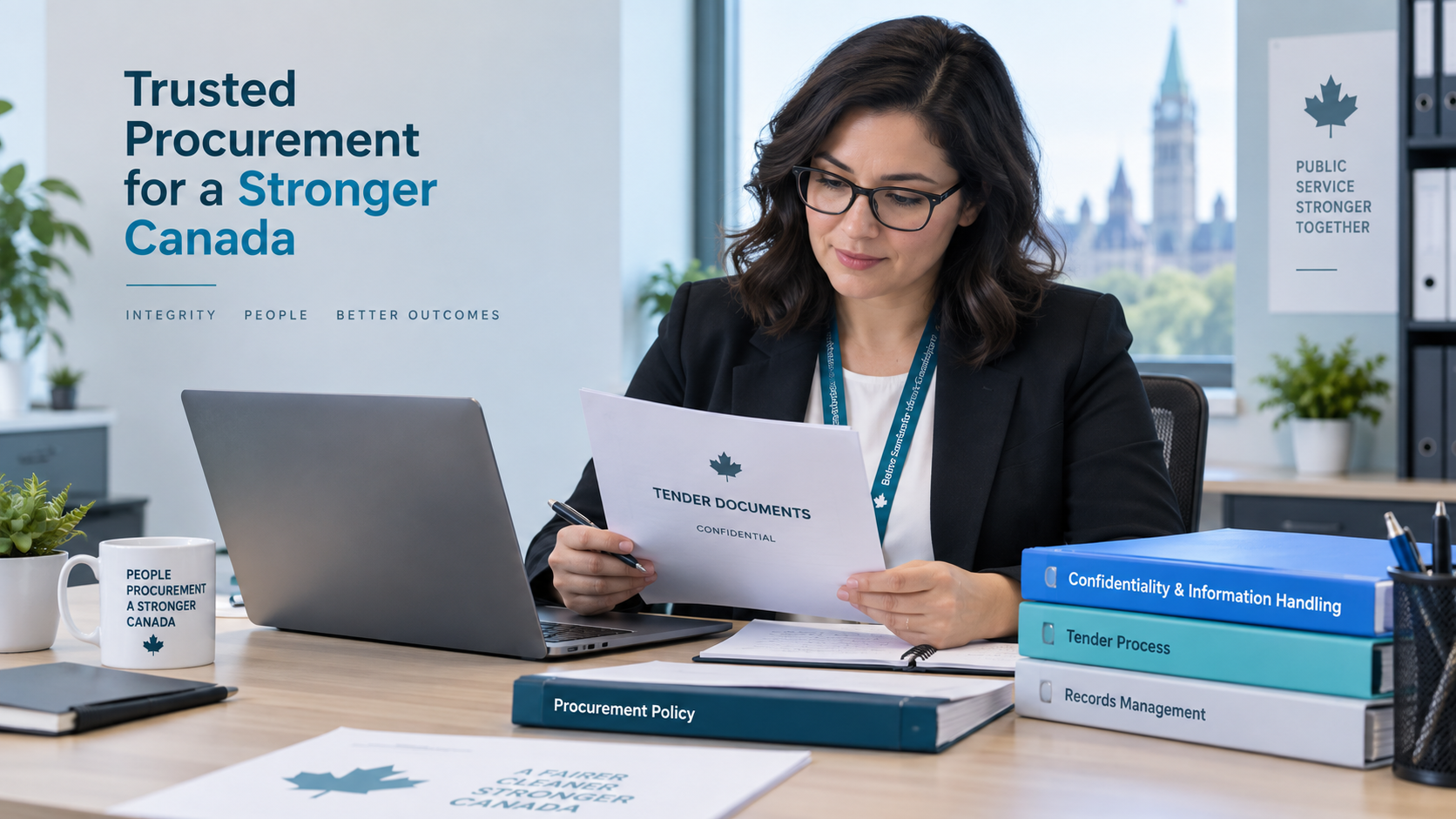
procurement confidentiality rules
Key Takeaways
- Confidentiality rules exist to protect sensitive information, not to hide how public money is spent or how decisions are made.
- Buyers and suppliers both benefit from knowing what can be shared openly and what must stay restricted during a competitive process.
- Careful handling of proposals, pricing details, evaluation records, and personal data helps preserve fair competition among bidders.
- Protecting restricted information and maintaining public accountability work together, so neither one has to come at the expense of the other.
- When confidentiality obligations are understood early, your team can manage access requests and disclosure obligations with confidence.
The right approach is practical: identify sensitive information early, limit access to people with a legitimate business need, document decisions, and avoid promising more confidentiality than the applicable law permits. Canadian requirements can differ among federal, provincial, territorial, and municipal organizations, so this article provides an introduction rather than legal advice.
What is procurement confidentiality rules?
Procurement confidentiality rules are the policies, legislation, contract terms, and professional practices that guide how purchasing information is collected, used, stored, shared, and disclosed. They may apply to a supplier’s proposal, evaluation worksheets, technical methods, pricing details, personal information, security information, and communications during a competitive process.
A supplier’s label does not automatically make every page confidential. The public organization usually must assess whether the information meets the applicable test for protection, such as commercial sensitivity, trade-secret characteristics, third-party confidential information, or personal privacy. Access-to-information legislation may require disclosure of some records, subject to specific exemptions. At the federal level, organizations should consult the Access to Information Act and the Privacy Act. Provincial, territorial, and municipal bodies may follow different statutes and policies.
In practice, procurement confidentiality rules support controlled access rather than absolute secrecy. A procurement team can protect evaluation integrity before an award, restrict internal discussions to authorized participants, and redact legitimately protected details during a disclosure review. It should also retain records according to the organization’s records-management requirements and provide suppliers with accurate information about debriefings and possible access requests.
Benefits of procurement confidentiality rules

Well-applied procurement confidentiality rules protect the fairness of a competitive process. Before closing, restricted access can reduce the risk that one supplier receives another supplier’s information or gains an improper advantage. During evaluation, confidentiality supports independent scoring and helps evaluators focus on the published requirements rather than outside pressure, informal conversations, or undisclosed preferences.
These practices also protect legitimate business information. A proposal may contain a supplier’s methodology, product design, security approach, pricing structure, or implementation plan. Treating such material carefully can support supplier participation while respecting the fact that public purchasing must still be transparent and defensible. The goal is not to guarantee secrecy. The goal is to make a reasoned decision about what can be shared and what requires protection.
Clear controls improve accountability inside the organization. A written confidentiality agreement, conflict-of-interest declaration, access list, secure document repository, and documented evaluation record give the procurement lead a clearer audit trail. They also help staff understand when information may be discussed, copied, transmitted, or released. A consistent process is easier to explain to suppliers, reviewers, auditors, elected officials, and members of the public.
Training turns these expectations into everyday behaviour. Procurement Training for Teams offers a Canadian-focused public sector procurement curriculum that can help a group build shared language around bid security, ethical conduct, evaluation governance, privacy, records, contract management, and supplier communication. The program includes a progressive certification pathway from essentials to procurement expert level, along with.
Key insight
Confidentiality is strongest when it is planned before information arrives. Use proposal instructions to explain how suppliers should identify sensitive content, state that the organization must follow applicable access legislation, and avoid accepting a blanket promise that an entire submission will remain private. For teams that need a structured learning path, Procurement Training for Teams provides a practical foundation for consistent decisions.
How to Choose procurement confidentiality rules
Choosing an appropriate confidentiality approach starts with jurisdiction. A federal department, provincial ministry, territorial agency, municipality, and broader public-sector organization may follow different access-to-information, privacy, procurement, and records-management requirements. Identify the organization’s governing legislation and internal policy before drafting solicitation language or responding to a supplier. Federal teams should review the Access to Information Act and Privacy Act. Provincial, territorial, and municipal teams should confirm the applicable statute, policy instruments, information commissioner guidance, and retention schedule.
Next, define the information that requires controlled handling. A submission may contain technical specifications, source code, manufacturing methods, security details, pricing formulas, personal information, or a proposed delivery model. Ask whether disclosure could reasonably harm a supplier’s commercial interests, expose personal information, compromise security, or undermine the integrity of an active competition. A supplier’s confidentiality label is useful evidence, but it does not decide the legal outcome. The public body generally must assess the record against the applicable access legislation and may need to consult the supplier before releasing information.
Good solicitation documents set expectations before bids arrive. Explain that proposals will be handled securely, accessed only by authorized participants, and retained according to organizational requirements. State that the organization cannot promise absolute confidentiality where legislation requires disclosure. Ask suppliers to identify specific pages or passages, describe the reason for the request, and separate genuinely sensitive material from general corporate information. A blanket designation covering an entire proposal makes review harder and may weaken the supplier’s position during an access request.
Build the operating controls around the procurement lifecycle. Before closing, use a restricted distribution list, approved communication channel, and secure repository. During evaluation, require conflict-of-interest declarations, confidentiality acknowledgements, independent scoring, version control, and a documented record of questions and answers. After award, establish a process for debriefings, access requests, redaction, retention, disposal, and escalation to privacy or legal specialists. These controls should also cover consultants, subject-matter experts, observers, and temporary staff who may see bid material.
Selection checklist for a procurement team
- Confirm the governing jurisdiction and applicable access, privacy, procurement, and records requirements.
- Use precise solicitation wording instead of promising secrecy without qualification.
- Request specific confidentiality markings with a supporting explanation.
- Separate commercial sensitivity, personal information, security information, and ordinary business content.
- Record who accessed evaluation material and why.
- Plan the response process for debriefings and information requests before award.
Teams building a shared process may benefit from Procurement Training for Teams. Its Canadian-focused public sector procurement curriculum can help staff practise evaluation governance, ethical conduct, privacy awareness, supplier communication, and contract records. The progressive certification pathway from essentials to procurement expert level supports learning at different experience stages, while the. Procurement Training for Teams is best considered alongside the organization’s own policy review and jurisdiction-specific guidance.