contract risk management
Contract risk management is the process of identifying and responding to issues that could affect a supplier’s delivery after a contract is signed. A procurement team can reduce uncertainty by confirming responsibilities, tracking performance, documenting decisions, managing changes, and addressing warning signs early.
Key Takeaways
- Contract risk management begins once the agreement is signed, shifting the focus from negotiation to protecting successful delivery.
- Confirming who holds each responsibility helps both the buyer and the supplier avoid confusion as work moves forward.
- Tracking supplier performance on a regular schedule gives a procurement team early visibility into potential delivery problems.
- Documenting decisions and managing changes in writing creates a reliable reference point if questions or disputes arise later.
- Responding to small warning signs promptly often prevents them from growing into serious contract failures.
For teams building this capability, Contract Management Training for Teams provides Canadian procurement and contracts training for public-sector teams. It can help colleagues develop a shared approach to contract oversight, accountability, and ethical decision-making.
What contract risk management means after a contract is signed
Contract risk management is the organized process of protecting a contract’s intended outcome after signature. A contract risk is an uncertainty that could affect cost, schedule, quality, privacy, service continuity, compliance, or the working relationship with a supplier. The process gives the team a way to identify these uncertainties, assign ownership, monitor warning signs, and record responses.
A plain-language definition for procurement teams
A practical definition is: contract risk management means knowing what could go wrong, deciding how the team will respond, and checking whether that response is working. It covers more than reviewing clauses before award. The team may need to monitor the statement of work, service levels, milestones, acceptance criteria, insurance documents, security requirements, reporting duties, payment controls, escalation routes, and communication records.
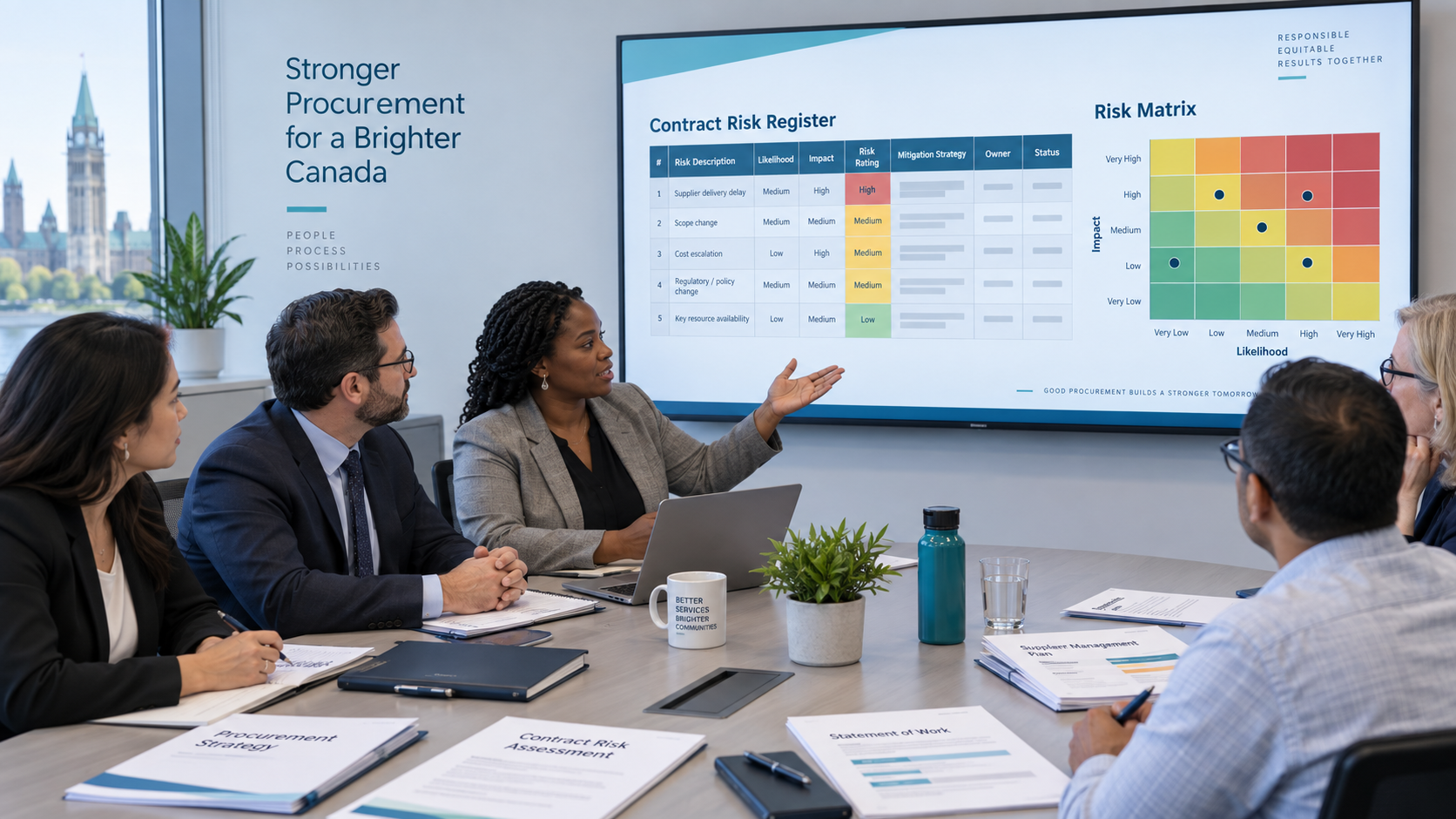
Each risk should be described clearly enough for a colleague to understand it. Record the cause, possible effect, likelihood, impact, owner, control, due date, and status. A contract risk management framework can be a risk register connected to the contract file. A contract risk assessment template can provide consistent headings, but a useful conversation matters more than the document’s layout.
Why the post-award stage deserves steady attention
Signing a contract creates obligations; it does not complete the work. The supplier must deliver, the organization must provide its own inputs, and authorized personnel must make decisions within their responsibilities. A missed milestone, undocumented change, unsupported invoice, or unassigned service concern can become harder to address when no one records the next step.
A regular review rhythm keeps the contract visible. Compare delivery with the agreed requirements, confirm supporting evidence, update the risk register, document approvals, and raise material concerns through the established process. This supports responsible stewardship of public resources and gives decision-makers a clear record of what happened and why.
Key insight: risk ownership must be visible
A risk register supports action only when every item has an owner. Assign it to a person or role with the authority, information, and time needed to respond. A contract manager may coordinate the review, while a program lead, finance representative, privacy specialist, or supplier contact owns a specific control. Set a review date and define the evidence that will show whether the response is working.
Clear records also support fair supplier relationships. Measure performance against the signed requirements rather than informal conversations or undocumented requests. If a change is proposed, record its reason, approval, effect on cost or schedule, and connection to the original need. The supplier and the organization then have a clearer basis for discussion.
Learning can help a team apply this process consistently. A contract risk management course may introduce terminology, controls, and review methods, while a contract risk management PDF can serve as a reference during team discussions. The strongest learning connects those resources to contract files, approval pathways, performance meetings, and escalation decisions.
Build a repeatable practice, not a one-time review

A repeatable practice begins with the contract’s intended outcome. Ask what must remain true for delivery to succeed: funding must be available, specifications must be understood, approvals must be timely, information must be handled appropriately, and both parties must meet their responsibilities. Record the most relevant exposures, connect them to owners, and set review points that fit the agreement.
Risk management works best as part of ordinary contract administration. A service review, milestone check, invoice validation, change log, and issue tracker can create useful evidence without producing paperwork for its own sake. A new team member should be able to see what was expected, what occurred, what remains unresolved, and who owns the next decision.
Practical controls for contract oversight
Controls should match the agreement. A technology contract may call for privacy reviews, access controls, incident reporting, and continuity planning. A construction arrangement may rely on site records, progress certification, safety documentation, and inspection results. A professional services contract may depend on deliverable acceptance, approval gates, conflict declarations, and evidence of completed work. The shared principle is simple: connect each risk to a requirement and reliable evidence.
- At commencement: confirm roles, authority levels, deliverables, deadlines, reporting channels, and required documents.
- During performance: compare actual progress with the statement of work, service standards, milestones, and payment conditions.
- When an issue appears: record the facts, assess the effect, notify the right people, and follow the established escalation path.
- When a change is proposed: document the business reason, approval, scope effect, cost, timing, and impact on risk.
- At closeout: confirm acceptance, settle outstanding matters, preserve records, and capture lessons for future procurement.
Questions for contract governance
Some agreements may require attention to data stewardship, accessibility, climate-related disruption, supplier resilience, artificial intelligence, or responsible information sharing. The right questions are practical: which risks matter for this service, who can monitor them, what evidence is available, and when should the organization review its approach?
Canadian public procurement requirements and organizational practices vary by jurisdiction and circumstance. For a live contract question, consult the relevant official government guidance, your organization’s policies, and qualified procurement or legal professionals.
Contract risk management is most useful when ownership, evidence, escalation, and learning are part of the contract lifecycle. Begin with a manageable register and a review rhythm the team can maintain. Improve the process as people gain experience, and use training to build a shared foundation for accountable contract oversight.
Frequently Asked Questions
What are the 5 steps of contract management?
Contract management after award typically follows five steps: confirm responsibilities, track delivery, document decisions, manage changes formally, and act early when performance starts to drift. Each step keeps obligations visible for both the organization and the supplier. Together they protect the contract’s intended outcome and give decision-makers a clear record of what happened and why.
What are the four pillars of contract management?
The four pillars of contract management are clear accountability, documented decisions, a regular review rhythm, and fair supplier relationships. Each risk should have a named owner with the authority and information needed to respond. A monthly service review, invoice validation, and change log keep these pillars working without creating unnecessary paperwork.
What are the 5 components of contract risk management?
Contract risk management includes five components: identifying uncertainties, assessing likelihood and impact, assigning ownership, monitoring warning signs, and recording the response. A simple risk register linked to the contract file can capture all five. The quality of the team’s discussion matters more than the format of any template.
What should a contract risk register include?
A contract risk register should record each risk’s cause, possible effect, likelihood, impact, owner, control, due date, and status. That level of detail lets a colleague quickly understand the risk and see what is being done about it. Aim for a working register connected to the contract file rather than a separate exercise.
Who should own contract risks?
Contract risks should be owned by the person or role with the authority, information, and time to respond, which may be a program lead, finance representative, privacy specialist, or supplier contact. The contract manager often coordinates the overall review. Visible ownership creates a practical audit trail and helps teams raise concerns before service delivery is affected.
What are the most common risks after a contract is signed?
Common post-award risks include missed milestones that go unrecorded, amendments without a clear rationale, invoices approved without evidence, and service concerns that are never assigned for follow-up. Small gaps like these can grow over time. Risks can also touch cost, schedule, quality, privacy, service continuity, and compliance with the signed requirements.
How often should a procurement team review contract risks?
A procurement team should review contract risks on a steady rhythm, with review points set to match the contract’s level of complexity. A monthly service review, milestone check, and invoice validation can provide useful evidence without extra paperwork. Set a review date for each risk and define the evidence that will show whether the response is working.